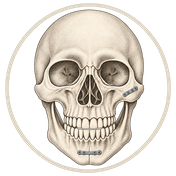
The maxilla is your upper jaw. It sits at the centre of the face. A strong hit can separate it from the rest of the skull along set lines. Surgeons group these breaks into three patterns. They call this the Le Fort classification. It helps them plan the repair.
The three patterns
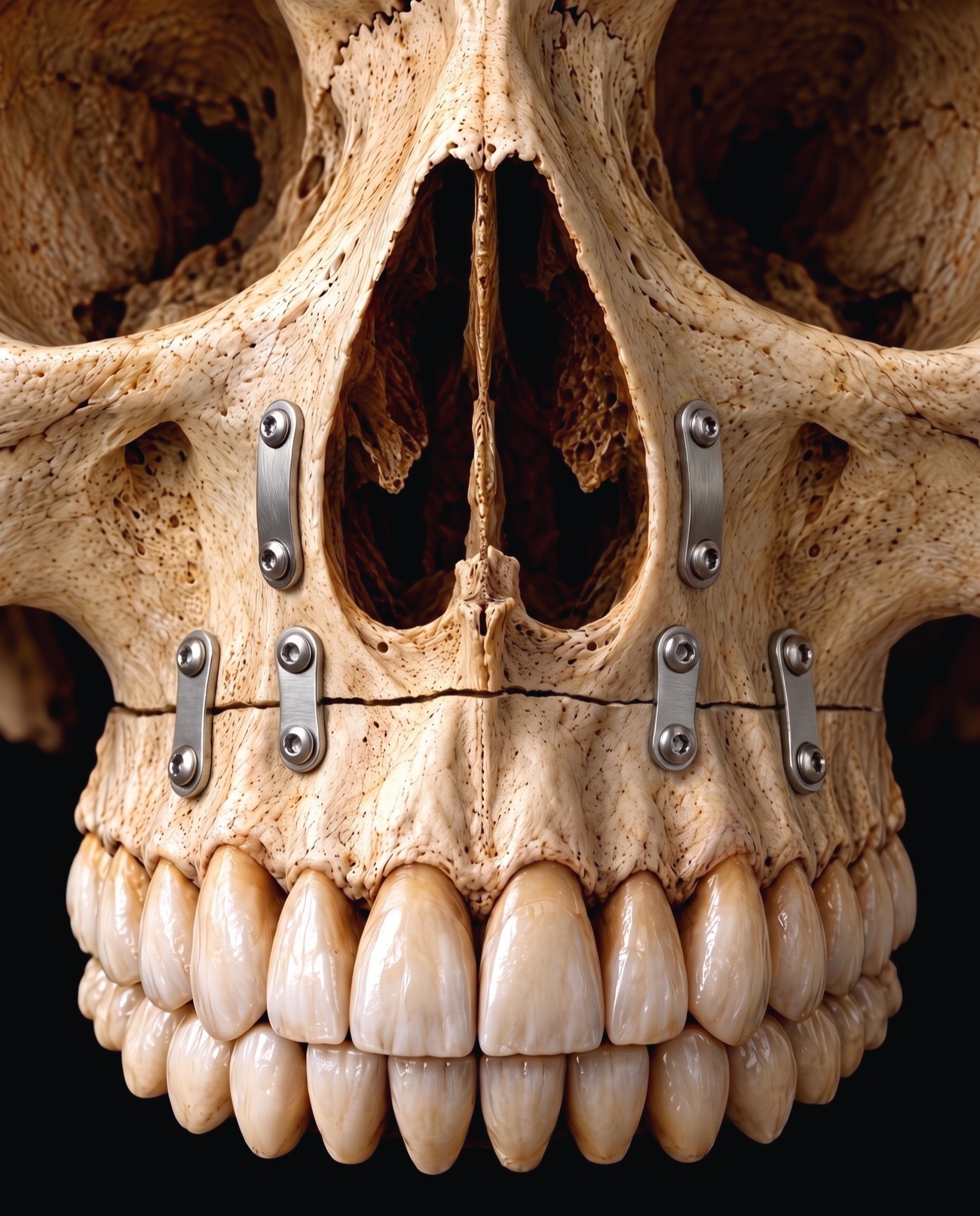
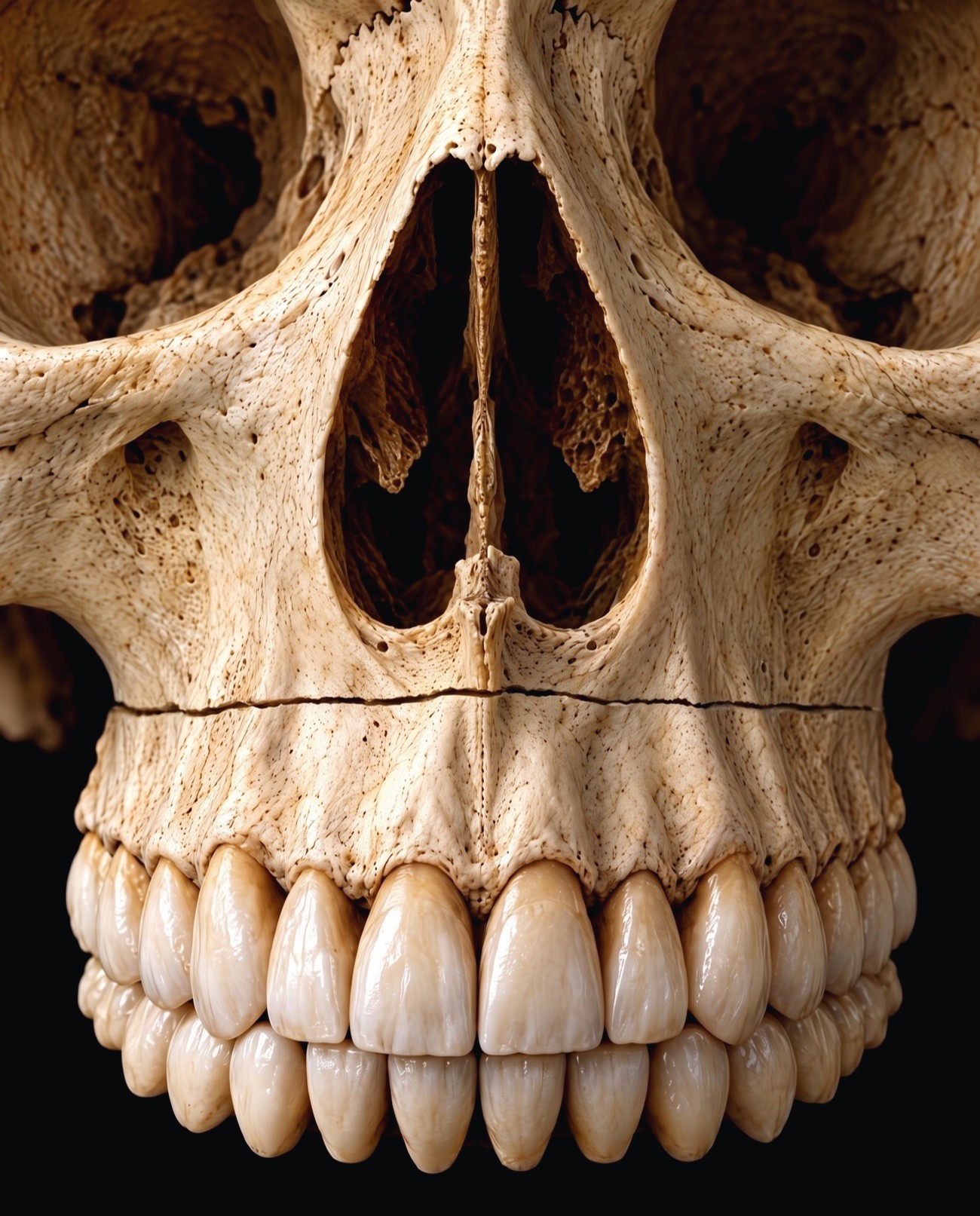
- Le Fort I: a level break that frees the upper teeth and palateThe roof of the mouth. from the rest of the face.
- Le Fort II: a break in the shape of a pyramid. It goes up through the cheeks to the top of the nose.
- Le Fort III: a high break that separates the whole mid-face from the base of the skull.
Real injuries are often a mix of these patterns. Each side of the face can be different.
How surgeons treat it
The aim is to rebuild the height, the width, and the projectionHow far a part of the face stands out from the head. of the mid-face. The aim is also to make the bite correct again. The surgeon moves the bones back into line. Small titaniumA strong, light metal. Surgeons use it for the plates and screws that hold bone. plates and screws hold them in place. The cuts are usually hidden inside the mouth and around the eyes. For complex cases, the team plans the repair with CT scansA detailed type of X-ray. It builds a 3D picture of the bones. and 3D models.